Spill The Beans: Why We Say It
Have you ever wondered why we say someone “spilled the beans?”
I certainly have.
A friend of mine owns a wonderful meal preparation business where she thoughtfully sources local, organic, fresh ingredients whenever she can. We find ourselves talking about food rather frequently, not just recipes, but quality, presentation, color, and the joy of preparing something good for someone else.
Not long ago, I wandered through one of our local markets with my camera in hand. Many of the vegetables had been pulled from the ground only days before. The displays looked more like pieces of art on exhibit than produce waiting to be purchased. Deep reds, bright greens, rich yellows, overflowing baskets, and just enough garden fragrance drifting through the air to remind me how wonderfully fresh everything was.
A little farther along, I stopped in front of beautiful paper packages filled with lentils and beans. Each bag had a small window offering a peek at the tiny specks of deliciousness looking right back at me.
Of course, I had to pick them up and admire the different colors and textures.
Then my whimsical brain did what it often does.
Looking down at those beautiful little beans, I quietly smiled to myself and thought, “Don’t spill the beans.”
Why I think this way is anyone’s guess.
Now I had to know where the phrase came from.
What Does “Spill the Beans” Mean?
To “spill the beans” means to reveal secret or hidden information, often sooner than intended. Someone may accidentally spoil a surprise, disclose something private, or finally share what everyone else has been waiting to hear.
It’s such a wonderfully visual phrase. Once the beans are scattered, they can’t simply be placed back inside as though nothing happened. Information can feel much the same way. Once it’s been shared, the conversation has changed.
Where Did “Spill the Beans” Come From?
Where Did “Spill the Beans” Come From?
Here’s where the story becomes especially interesting.
You may have heard that the phrase came from an ancient Greek voting practice in which beans were used as ballots. According to the popular explanation, overturning the container would reveal the result before the official count.
Wow! So interesting!
I’d never heard anything about this possible history before. Maybe you hadn’t either.
It’s a memorable story, but it hasn’t been proven as the source of the English expression. Etymologist Anatoly Liberman, writing for Oxford University Press, notes that the exact origin of “spill the beans” remains unknown. That makes the Greek voting story better understood as a popular possibility rather than settled history.
What we can say with more confidence is that “spill the beans” appeared in American English during the early twentieth century. Merriam-Webster notes that an earlier use, especially in sports writing, meant something closer to spoiling a situation or upsetting the apple cart. Before long, the phrase developed the meaning we recognize today: revealing information that had been kept quiet.
The expression’s precise inspiration remains uncertain, which somehow makes it even more interesting to me. Sometimes a phrase travels through everyday speech long enough for its original footsteps to disappear.
Why Has the Phrase Lasted?
“Spill the beans” has lasted because the picture is immediate.
Beans are small, plentiful, and difficult to gather once scattered. A secret can behave much the same way. One sentence slips out, then another person knows, and suddenly the information has traveled much farther than anyone intended.
The phrase can also sound playful rather than severe. We may say, “Go ahead, spill the beans,” when we’re eager to hear good news, learn the surprise, or finally discover what someone has been planning.
Its meaning is clear, its picture is memorable, and it’s simply fun to say. That combination gives a phrase rather impressive staying power.
From Market Beans to a Greeting Card
Of course, my curiosity didn’t stop with the phrase.
That ordinary moment at the market became this Studio Journal story, and somewhere along the way, it also inspired a greeting card for my friend.
She loves it and plans to use the cards for little notes of appreciation tucked alongside the beautiful meals she prepares.
I couldn’t imagine a more fitting place for them.
Her work brings together thoughtfully sourced ingredients, healthy eating, beautiful presentation, and genuine care for the people she serves. My hope is that the card adds one more cheerful ingredient to the experience.
Should you ever find yourself enjoying one of her amazing meals, perhaps her cooking and my little greeting will work together to bring you health, happiness, and joy.
That’s quite a journey for one bag of beans sitting quietly on a market shelf.
One of my favorite parts of creating is noticing how ideas continue to grow.
Long before I wondered where "spill the beans" came from, my friend's love of fresh ingredients had already inspired a Garden of Eaten greeting card. After this local market visit and my curiosity about the phrase, I created another variation just for her, spelling EATEN with green beans, herbs, and tiny garden blossoms.
I've included a little peek below because it still makes me smile.
Wander a Little Further
There are many more familiar expressions waiting inside the growing Curious Food Phrases collection.
You might also enjoy discovering the story behind Food for Thought, or simply wander through the Curious Food Phrases hub to see what's on the menu so far.
Gardens, vintage trucks and this phrase have inspired more than one greeting card. One became the Garden of Eaten design you'll find in my shop. Another, created especially for a friend who lovingly prepares fresh meals, even spells EATEN with fresh green beans and herbs. (I've included a little peek below because it still makes me smile.)
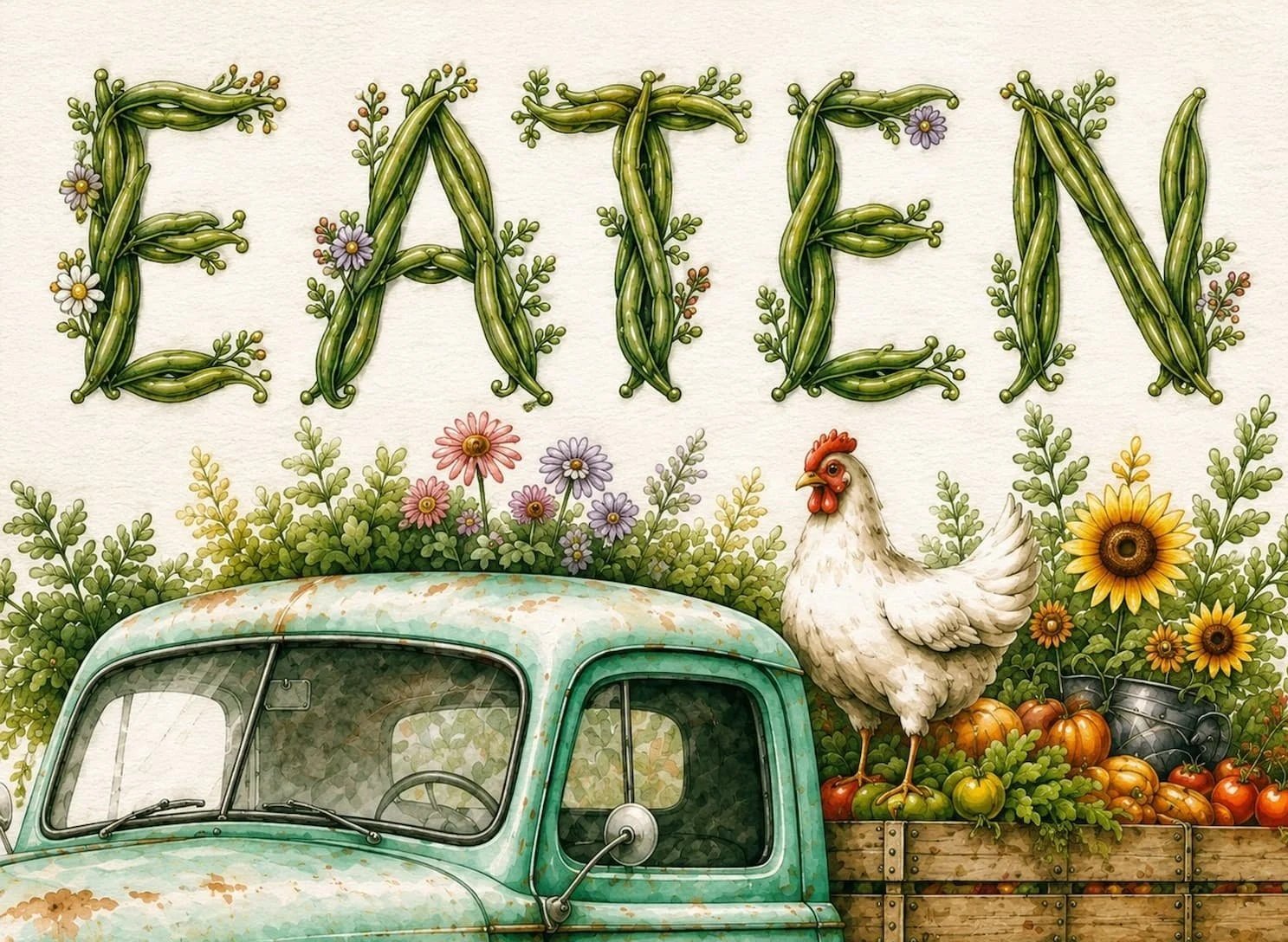
Here’s a closer peek. Yes, every letter in EATEN really is made from green beans, herbs, and small garden flowers.
Where will you Scatter Joyfulness today?